
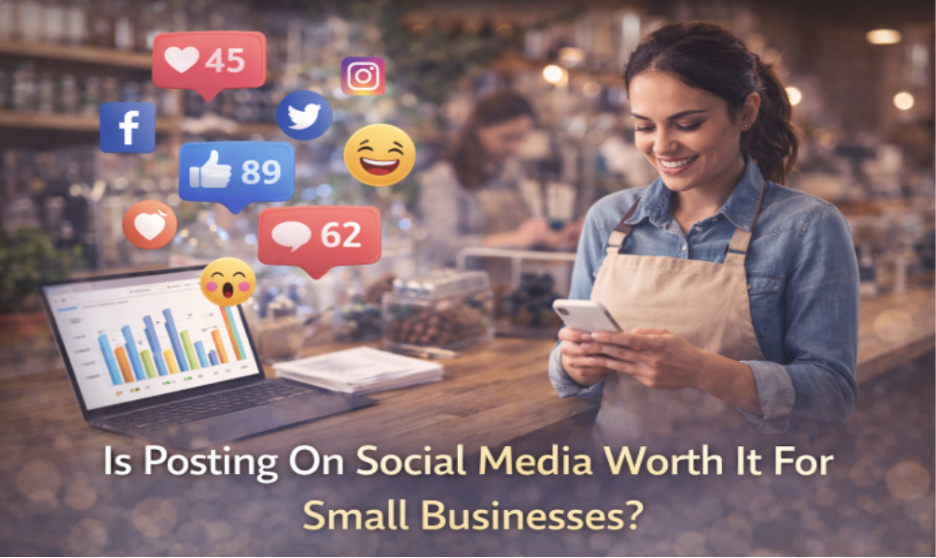
Small business owners often hear that they need to “be active on social media,” yet few people explain why it truly matters or how it connects to revenue. Between managing operations, hiring staff, and serving customers, posting online can feel like a distraction rather than a growth strategy. Instead of adding another task to an already full schedule, owners want to know one thing: Is posting on social media worth it?
To answer that, it helps to look at where customer attention actually lives today. More than 5 billion people worldwide use social media, representing nearly 61 percent of the global population. In other words, the majority of your potential customers spend part of their day on social media scrolling, researching, and forming opinions online before they ever pick up the phone. Therefore, social media has become a digital first impression.
When someone hears about your business, they often check your profiles to see whether you appear active, professional, and trustworthy. Your feed becomes more than a collection of posts. It becomes a visible record of your expertise, consistency, and reputation. Here is a closer look at why posting on social media can be worth the effort for small businesses.
1. Builds Your Digital Resume and Establishes Authority
Before a potential customer even considers making a call, they will likely research the business online, browsing websites and social media to ensure it is legitimate. A dormant account with outdated postings can be a turn-off, but a posting account regularly updated with business-related postings will show professionalism and legitimacy. In this way, social media serves as a digital resume, highlighting not only your business but also your team’s expertise and integrity. This credibility becomes even more impactful when combined with consistent, strategic posting through social media management.
Posting about the best parts of projects, providing tips, and answering frequently asked questions will eventually make your business the go-to authority in your industry, especially for home service businesses.
For example, when a homeowner requires HVAC repair, plumbing, or appliance maintenance, witnessing actual project results, maintenance tips, and customer testimonials will give them confidence and make them less hesitant to contact. These are the visible indicators of expertise that will encourage potential customers to contact your business, rather than losing them to a competitor.

2. Drives Traffic to Your Website
Social media is more than a platform to promote your business; it can be a driving force for attracting visitors to your website and generating opportunities for customer engagement. More visitors do not necessarily mean sales, but they are a stepping stone for potential customers to take the initiative and contact you. The secret to converting visitors into action is quality content. Posting random information will not make a difference, but posting information that solves problems, answers questions, or provides helpful tips will encourage visitors to click and engage.
For example, if you are a plumbing company, you can post an article about the signs of a hidden leak in your plumbing system. This type of content will be most effective if it:
• Answers customer questions and invites them to explore further
• Provides information about solutions to problems your customers face
• Links to service pages or blog articles that guide visitors to take action
But when your social media sites and website are combined, the result becomes even more powerful. Every click, view, and engagement sends a message of value to the search engines, and eventually, your local search rankings will improve. This combined strategy will help turn browsing visitors into qualified leads and eventually paying customers.
3. Sends Important Signals to Search Engines
Search engines will favor businesses that seem legitimate, relevant, and active. While social media platforms directly determine rankings, they are part of the overall environment that affects search engine visibility and helps your local SEO strategy. When your business has consistent information across all platforms, search engines feel more confident in your legitimacy. Your business name, address, phone number, and website URLs should match across your social media pages, website, and other online business listings. This consistency of information helps to build legitimacy in the eyes of both consumers and search engines.
While information is important, engagement is also a factor. When consumers search for your business and engage with your social media content, this helps to build brand recognition. Additionally, posting content from your website on social media sites helps to build your online presence. Every post that links back to a blog entry or service page helps to build visibility and provides another entry point to your website. As more people become aware of and engage with your content, search engines can detect this engagement.

4. Keeps Current Customers Engaged
Customer acquisition is often the focus, but customer retention is even more important to the bottom line. Social media is a great way to keep your former customers in mind without constantly advertising to them. By showing up in their news feeds, your business will always be top of mind. This is important because a former customer may see several posts without reacting, but when a new need arises, they will remember you from seeing your posts. Companies that feel familiar and are always in the customer’s mind tend to get repeat business because they are easier to remember. In addition to reminders, social media sites give you the opportunity to share customer testimonials, celebrate staff achievements, and highlight your community involvement. These types of posts make your company more human and help to build an emotional connection. When customers feel a connection, they are more likely to refer your services to their friends and family.
5. Delivers Real Returns When Managed with Strategy
Just posting content is not enough to ensure success. Without setting goals, developing content strategies, and monitoring progress, it can be difficult to achieve tangible results. Planning turns social media from a time-wasting activity into a data-driven tool for growth. Setting goals helps to stay focused. Some companies aim to increase website traffic, while others target the number of calls or awareness in a particular service area. After setting goals, monitoring metrics such as link clicks, engagement with local users, and campaign-related calls becomes crucial.
Paid social media marketing can complement organic marketing if done correctly. Posting popular content in specific geographic locations can help to increase awareness among potential customers who fit your ideal profile. Even a small budget can lead to tangible outcomes when combined with engaging content.

So, Is Posting on Social Media Worth It?
The answer is yes, but only when it is done with purpose and consistency. Social media platforms allow you to demonstrate your expertise, build your presence, drive qualified traffic to your website, and help your local SEO. It also keeps your past customers engaged and lets them know that you are a trusted source in your community. It does take work to succeed. Posting randomly or sporadically won’t yield any real results. Your message, content, and posting schedule are what give you momentum.